Robotics in Mid-Sized Manufacturers: Where Robots Pay Off Today
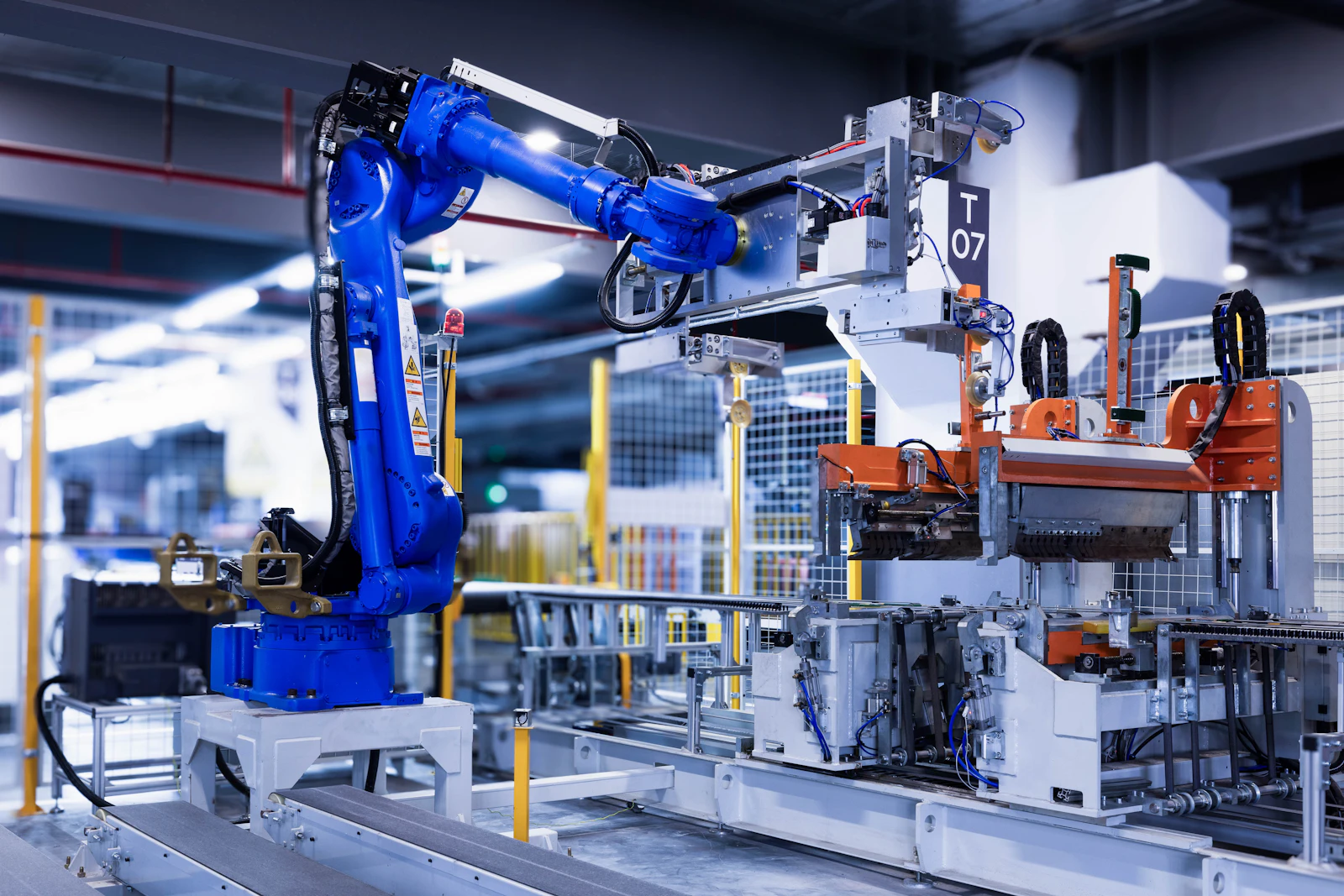
Robots pay off in mid-sized manufacturers where work steps repeat often, volumes are sufficient across shifts and variants are limited enough that changeovers do not consume the saving. What counts is the total investment of the application, including grippers and safety equipment. Executives gain clarity if they first describe the application, then calculate the payback and only afterwards discuss technology and suppliers.
This article is addressed to managing directors and plant managers of manufacturing mid-sized companies. It places the market in context using figures from the International Federation of Robotics, names seven criteria for economic applications, demonstrates a payback calculation and describes what has to be settled in operations once a decision for an initiative has been made.
How widespread are robots, and what does that mean for mid-sized companies?
Robots are widespread in industry, and Germany is among the most automated countries in the world. According to the “World Robotics 2023” report of the International Federation of Robotics, published in September 2023, 553,052 industrial robots were installed worldwide in 2022, around 5 per cent more than the year before, and the operational stock rose to about 3.9 million. Robot density, the number of robots per 10,000 employees in manufacturing, stood at 397 in Germany and 141 as the world average, according to the latest published figures for 2021. That puts Germany fourth and makes it the largest robot market in Europe. According to the same report, 25,636 industrial robots were installed in Germany in 2022, one per cent fewer than the year before.
For mid-sized companies this means the technology is proven and suppliers and integrators as well as practical experience are available. That robots work is established, and the open question is which of a company's own applications justifies the investment. Large series manufacturers with high volumes answered it early. Mid-sized manufacturers with medium volumes and many variants have to answer it for each application separately, and that is where wrong decisions occur.
Which seven criteria decide economic viability?
Seven criteria decide whether a robot is economic, and the more of them are met, the more reliably an application pays back. The table sets them out with the test question and the indication in each direction.
The variant range is the criterion most easily underestimated in mid-sized companies. A robot that runs eight hours a week and needs two hours per changeover saves less than its cycle time suggests. The question of how many changeovers occur per day and how long each takes therefore belongs in the requirements before any quotation.
How do you calculate the payback of a robot? A worked example
The payback period is the total investment divided by the annual net saving, and both quantities cover more than a quotation for the robot arm shows. On the investment side, alongside the robot there are grippers and feeding, safety equipment, plus programming, integration and commissioning. Anyone who budgets only the price of the arm underestimates the investment: the total investment of an application is often well above the price of the arm, and the margin has to be evidenced by quotations for the specific application. On the savings side there is the labour time saved, less scrap with rework avoided, and higher utilisation of the plant. Against this stand running costs for maintenance and energy, plus spare parts and adjustments.
The following example is illustrative. The values are planning assumptions and have to be replaced by quotations and your own data. The total investment of a cell is 200,000 euros. It takes over work equivalent to 1.5 full-time positions at 60,000 euros full cost each, which is 90,000 euros a year. Less scrap saves 10,000 euros. Running costs are 20,000 euros. The net saving is 80,000 euros a year, and payback is 200,000 divided by 80,000, or 2.5 years. If utilisation falls so that only one full-time position is replaced, the net saving drops to 50,000 euros and the payback rises to four years. This sensitivity calculation shows which assumption decides the project.
The calculation also shows that robots often take over work that stays unfilled anyway because of a shortage of staff. Where positions cannot be filled, the value of secured production takes the place of the staff saving. The business case should disclose this distinction so that management knows which assumption governs the calculation.
When does a robot pay off, and when a cobot?
An industrial robot pays off at high utilisation and stable processes, and a collaborative robot, or cobot, with changing tasks and smaller volumes. Industrial robots work fast and with high payload, usually behind safety fences. Cobots are designed to work alongside people, work more slowly, can be redeployed more easily and manage without elaborate guarding, provided the safety assessment of the application allows it. The relevant standards for robot safety, above all ISO 10218, and a risk assessment for the specific application apply. The two types complement each other, and the choice follows the required cycle time and the number of changeovers.
How do executives prepare a robot investment?
Executives prepare a robot investment in four steps that begin with the task and end with operations. In the first step the business unit describes the task with cycle time and variants, plus quality criteria. In the second a business case is built from the integrators' quotation values and a sensitivity calculation. In the third the organisation is clarified: who reprograms, who maintains, who responds to faults and what qualification do the people at the cell need? In the fourth step a limited start with one application delivers metrics before further cells follow. The article on time to market shows why limiting parallel initiatives shortens lead time here as well. How executives turn pressure to automate into a plan is covered in the article on AI FOMO.
For robots with machine vision or learning methods the same rules apply, with an added look at data and checkability that the article on ChatGPT in business describes for language models: an application is ready for approval when its result can be checked.
Robotics in mid-sized manufacturers with Niehues Consulting
Niehues Consulting is a consultancy for AI management and organisation design from a delivery perspective, based in Düsseldorf, and is not a robotics integrator. Founder Marin Niehues builds organisations that deliver, in projects ranging from VC-funded scale-ups to DAX 40 corporations and in more than 20 countries across six continents. Integrators supply the technology of the cell. Niehues Consulting clarifies before and afterwards what an initiative needs to succeed: the business case, the selection and sequencing of initiatives, introduction into operations, delivery management and the organisation that owns the cell.
The approach follows the Niehues Delivery Model. Three checks matter most for robot projects: Is the business case confirmed with real values? Which roles, decision paths and interfaces does operations need? Who is responsible for operations from day one? Scope and terms of an engagement are discussed in the free initial consultation, which you can arrange via the contact form.
Frequently asked questions
When is a robot worth it for a small or mid-sized manufacturer?
A robot is worth it when a sequence repeats often, the cell is well utilised and the number of variants stays limited. The decisive figure is the payback from total investment and net saving. It is calculated from quotation values and secured with a sensitivity calculation.
How much does an industrial robot cost with installation?
The total cost of a robot application is often well above the price of the robot arm, because grippers and feeding as well as safety equipment, programming and integration are added. Only quotations for the specific task give reliable figures. For planning, the total investment from quotations applies, and the catalogue price of the arm is a poor guide.
How quickly does a robot pay back?
Payback is the total investment divided by the annual net saving. In this article's worked example it is 2.5 years and rises to four years if one position rather than 1.5 is replaced. The values are planning assumptions and must be replaced by your own data.
How many robots are there in Germany?
According to IFR figures for 2021, Germany had a robot density of 397 robots per 10,000 employees in manufacturing, ranking fourth worldwide. The world average was 141. Worldwide, about 3.9 million industrial robots were in operation in 2022, and Germany added around 25,600 new ones that year.
What is the difference between an industrial robot and a cobot?
Industrial robots work fast and with high payload, usually behind safety fences. Cobots are designed to work alongside people, work more slowly and are easier to redeploy. Both require a safety assessment of the specific application.
Do robots replace jobs in mid-sized companies?
Robots first take over individual work steps, above all heavy, monotonous or hazardous tasks. Where positions cannot be filled, they secure production. The business case should disclose whether the saving comes from replaced working time or from secured output.
Do you need a system integrator for robotics?
Most mid-sized companies work with a system integrator who supplies the cell together with safety and programming. The business unit supplies the task description and is accountable for operations. Niehues Consulting clarifies the business case as well as introduction and organisation and does not supply integration.
Let’s talk about your initiative.
In 30 minutes we clarify where your organisation stands and which step will pay off most now.
Book a consultation30 minutes · free of charge · no obligation