Big Room Planning: Resolving Dependencies in Two Days
Big Room Planning resolves dependencies between teams by bringing everyone involved into one room for one or two days to negotiate their dependencies directly with each other. The method replaces weeks of coordination by email and ticket with a conversation in which decision-makers sit at the table. It pays off once waiting time between teams ties up more capacity than the event itself.
This article describes the format, calculates cost and benefit in a worked example and sets out the criteria for when Big Room Planning is worth the effort and which alternatives suffice in smaller set-ups.
What is Big Room Planning?
Big Room Planning is a recurring planning event in which several teams, their product owners and the responsible managers create the plan for the next period together in one room. The idea comes from lean management: Toyota uses the “obeya”, the big room, in which participants make information visible on the walls and take decisions where the work happens. In software delivery the format became known through the Scaled Agile Framework, which calls it PI Planning. There, the teams of a delivery train plan face to face over two days, usually for a period of eight to twelve weeks.
The principle rests on an insight from product development: in his book on the flow of product development (2009), Don Reinertsen describes how long queues and large batches extend lead time more than the work itself. Dependencies between teams are such queues. A request that sits for a week on the official route can often be answered in ten minutes in the room. The mechanisms behind dependencies and the tools available are described in the article on dependencies between teams.
How does Big Room Planning work?
Big Room Planning runs over two days in three phases: alignment on the goal, planning within the teams and reconciliation between the teams. The following outline follows the sequence of the Scaled Agile Framework and transfers to smaller groups.
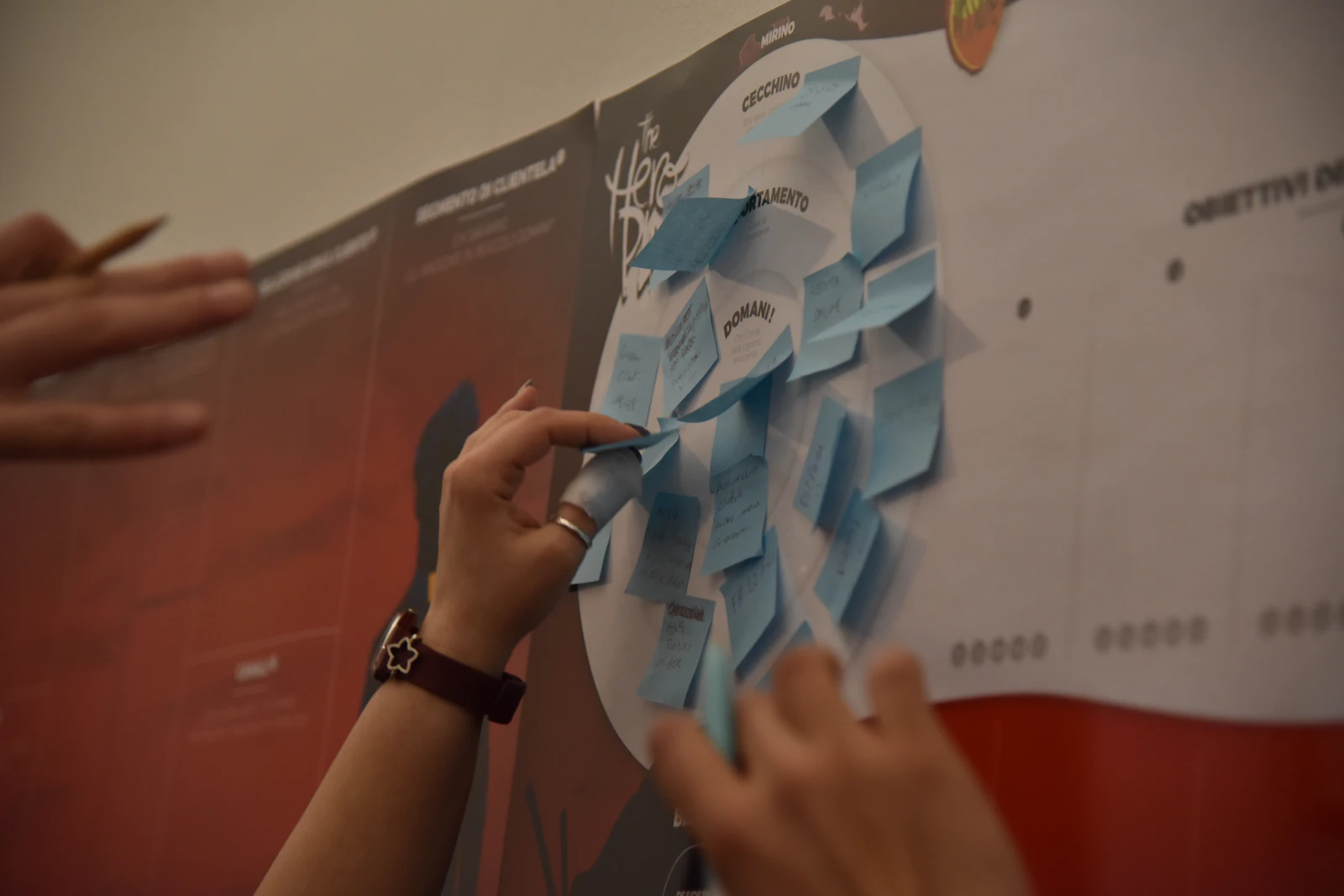
Two elements make the difference. The first is the dependency board: every dependency becomes a card with a string between two teams, visible until both sides have confirmed their commitment. The second is the confidence vote at the end. Each team shows with its fingers how sure it is of reaching the objective. Low scores lead to a rework of the plan on the spot until the team feels sure enough. The room sorts risks by a simple logic: resolved, assigned to an owner, accepted or mitigated. The commitments from the room form the basis of release planning.
When does Big Room Planning pay off? The calculation
Big Room Planning pays off when the waiting costs of dependencies per cycle exceed the cost of the event including preparation. Calculate the cost of the event in person-days and divide it by the waiting cost per dependency. The result is the number of dependencies from which the room pays for itself. The following example is illustrative.
For this group the room pays for itself once about 18 dependencies arise per cycle and the event resolves most of them. With eight teams and several open dependencies each per cycle that threshold is within reach; with three teams it usually lies out of reach. The calculation does not replace measurement: count beforehand how many dependencies actually arose in the last quarter and how long they waited. The value of the waiting time can also be assessed with the cost of delay, as the article on cost of delay shows.
What prerequisites does Big Room Planning need?
Big Room Planning needs four prerequisites: a shared cadence across the teams, named product owners, decision-makers in the room and prepared backlogs. Without a shared cadence there is no beat at which dependencies fall due. Without product owners there is nobody to set priorities in the room. Without decision-makers, conflicts over capacity and precedence stay open, and the commitments are worthless. Without prepared backlogs the teams spend the first day understanding their tasks.
For group size, the Scaled Agile Framework names 50 to 125 people. Below that, a smaller format is often enough; above it, you split the group and plan in parallel. Whether the room can be used virtually is answered by practice with yes: distributed teams plan over several shorter sessions with a shared digital board. Exchange at the table is denser, and the virtual variant is workable for dispersed locations and saves travel costs.
Which mistakes make Big Room Planning ineffective?
Four mistakes make Big Room Planning ineffective: missing decision-makers, overloaded days, a plan treated as a contract and no follow-up. When managers appear only for the opening, conflicts stay open and the teams plan on assumptions. When the agenda is too full, no time remains for negotiation between the teams and the room becomes a presentation. When the plan is later treated as an immovable promise, teams lose the courage to name risks. And when nobody follows up the commitments in the weeks afterwards, the dependencies return to the email inboxes.
The alternative in smaller set-ups is a regular coordination meeting between a few teams, supplemented by a visible dependency board. Those who want to coordinate work on several levels will find in the article on Flight Levels a model that complements Big Room Planning at the top level.
Big Room Planning with Niehues Consulting
Niehues Consulting is a consultancy for AI management and organisational design from the delivery perspective, based in Düsseldorf. Founder Marin Niehues builds organisations that deliver, in projects from VC-funded scale-ups to DAX-40 corporations and in more than 20 countries on six continents. In the service area of delivery management he works as delivery manager, project manager or product owner. He prepares joint planning, follows up commitments and makes sure that decisions taken in the room also hold in operations later.
The approach follows the Niehues Delivery Model. For Big Room Planning, three of its check questions matter: Who decides, who delivers, who uses? Which roles, decision paths and interfaces does operations need? Which indicator shows after 90 days that the solution is taking hold? The scope and terms of an engagement are discussed in the free initial consultation, which lasts 30 minutes and can be booked through the contact page.
Frequently asked questions
What is Big Room Planning?
Big Room Planning is a planning event in which several teams, with product owners and managers, create the plan for the next period together in one room. Dependencies are negotiated directly between the teams. In the Scaled Agile Framework the format is called PI Planning and lasts two days.
How long does Big Room Planning take?
Big Room Planning usually takes two days, in the Scaled Agile Framework for a period of eight to twelve weeks. Smaller groups manage with one day. Also allow several person-days for preparation.
What is the difference between Big Room Planning and PI Planning?
PI Planning is the form of Big Room Planning in the Scaled Agile Framework, with a fixed sequence and terms such as Program Increment and Agile Release Train. Big Room Planning describes the general idea of planning several teams together in the same room. You can use the principle without adopting the entire framework.
How many people take part?
The Scaled Agile Framework names 50 to 125 people for one group. Below that a smaller coordination format is often enough; above it you divide the group into several that plan in parallel. What matters is that teams with mutual dependencies sit in the same room.
Can you run Big Room Planning remotely?
Yes, with a shared digital board and several shorter sessions over two to three days. Exchange is denser at the table, while the virtual form saves travel costs. With distributed time zones, schedule sessions that overlap.
How much does Big Room Planning cost?
The cost is the working time it ties up: participants times days plus preparation. With 72 people and two days that is 144 person-days plus preparation. Against this stand the waiting costs of dependencies, which you derive from tickets of recent quarters.
Which groups can manage without Big Room Planning?
Groups with few teams and little mutual dependency can manage with a light coordination format, which achieves the same effect at lower cost. The break-even from the calculation serves as a guide. If the number of dependencies per cycle lies well below it, stay with a dependency board.
Who has to attend Big Room Planning?
The teams with their developers, the product owners and the managers who decide on capacity and precedence have to attend. If the decision-making level is missing, conflicts remain open and commitments non-binding. A facilitator looks after the sequence.
Part of the guide: Organisational design and delivery management: the guide for organisations that deliver
Let’s talk about your initiative.
In 30 minutes we clarify where your organisation stands and which step will pay off most now.
Book a consultation30 minutes · free of charge · no obligation