Planning a Robot Cell: Investment, Payback and Floor Space
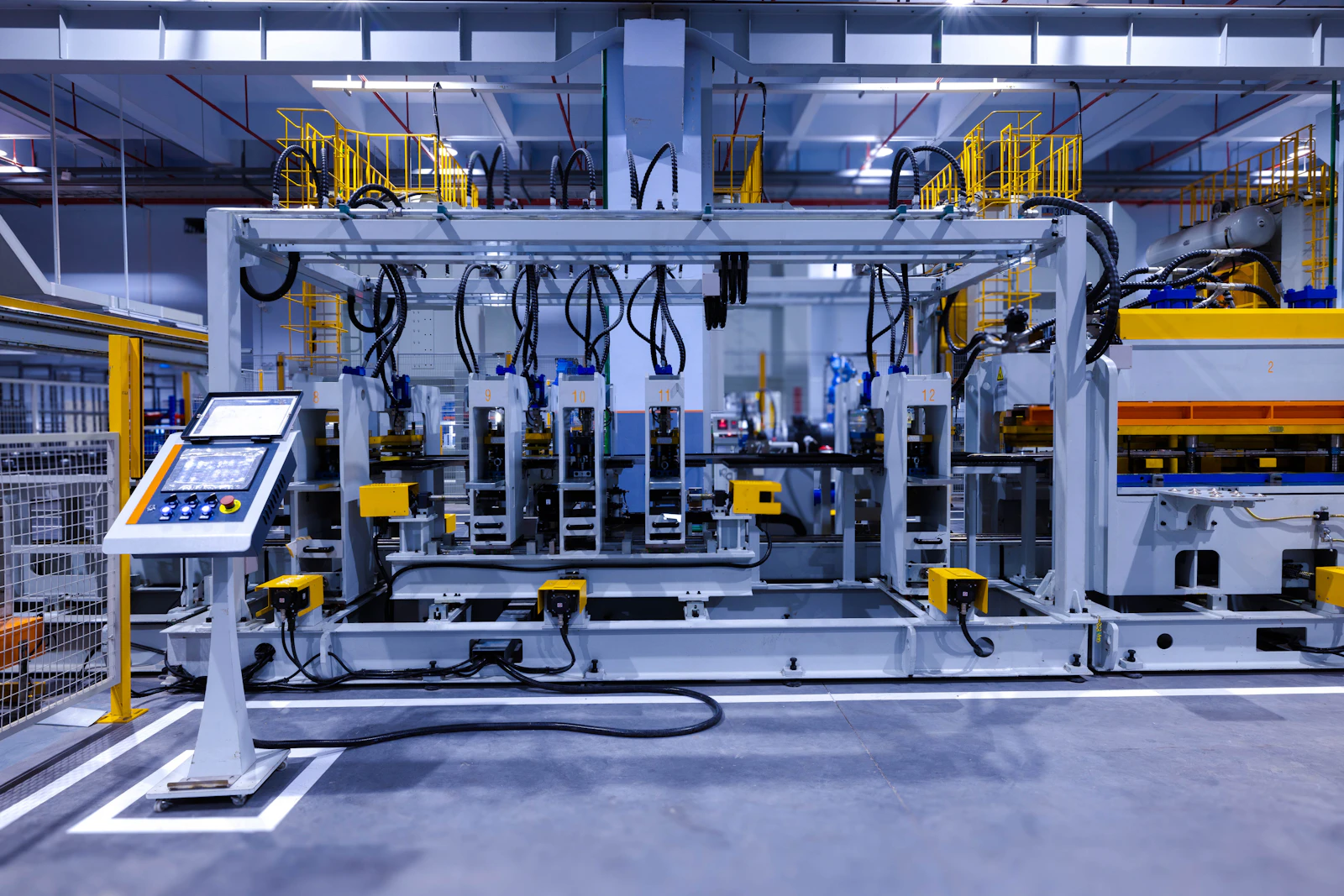
You plan a robot cell in three steps: list all cost blocks, calculate payback with realistic utilisation and settle the floor space before ordering. The robot arm is only one part of the investment. The gripper and feeding system, safety equipment and controls, and programming and commissioning decide the total price, and utilisation decides whether the cell pays for itself after two years or after four.
This article is written for managing directors and plant managers in mid-sized manufacturers who are planning a first cell. It provides a cost structure, a worked example with sensitivity, a rule of thumb for floor space and a checklist for preparation. Safety standards are covered only in outline. This article provides an overview and does not constitute legal advice.
How many robots are in use in Germany, and what does it mean for mid-sized firms?
Germany is one of the largest markets for industrial robots: according to the International Federation of Robotics (IFR) report “World Robotics 2023”, 553,052 industrial robots were installed worldwide in 2022, of which 25,636 in Germany. That is about five per cent of global installations and fifth place among the markets. The figures show that robot cells are a mature product with established suppliers and integrators. For a mid-sized company it follows that the risk lies in the planning: the task, the flow of parts and the utilisation, as well as the fit with operations.
How a first step becomes economic is described in the article on robot economics for mid-sized firms. The particulars of collaborative systems are covered in the article on cobots.
What does a robot cell cost?
The cost of a robot cell consists of eight blocks, of which the robot arm is only one. Reliable prices for a cell arise only from a quotation for the specific task, because part geometry, cycle time and safety requirements change the cost more than the robot model does. For planning, a complete list of blocks is sufficient, and you check every quotation against it.
The right-hand column shows where budgets are overrun in practice. Feeding and changeover between part variants in particular decide whether a cell saves time in daily work. A robot that picks fast but waits for parts is poorly utilised. Preparation of the task pays off more here than a faster arm.
How do you calculate the payback of a robot cell?
The payback period of a robot cell is the investment divided by the annual net saving, where the saving is the labour time replaced minus the running costs of the cell. The following example is illustrative and shows the logic of the calculation. Replace the values with your own.
The example shows the central sensitivity: if utilisation falls from the plan to 60 per cent, the payback period doubles. A decision therefore needs a range with a tested utilisation. The simple payback calculation ignores interest and useful life. For cells expected to run for several years, the net present value method adds a further view, with a discount rate set by your controlling department.
Besides labour time, other effects belong in the business case where they can be put into figures: less scrap through consistent quality, relief from physically demanding tasks, staffing of shifts for which no personnel can be found, and predictability of delivery. The article on automation against the skilled-labour shortage shows how the benefit can be derived from open positions. Each of these effects needs a baseline and an owner in the business unit, otherwise it remains an assertion.
How much floor space does a robot cell need?
The floor space of a robot cell follows from the reach of the robot, the protected area around the workspace and the areas for feeding, drop-off and maintenance access. The reach forms a circle: with a reach of 1.5 metres the arm sweeps about seven square metres. On top come the areas for pallets, conveyor or machine, the control cabinet and access routes for operators and forklifts.
Standards apply to safety, and you should know them at the planning stage. ISO 10218 (parts 1 and 2, 2011) sets safety requirements for industrial robots and robot systems. The technical specification ISO/TS 15066 (2016) covers human-robot collaboration and describes limits for forces and pressures on contact. The minimum distance of protective devices from the hazard follows from the approach speed and the stopping time of the system, as ISO 13855 describes. A collaborative application saves guarding and floor space only if the risk assessment of the specific application allows it, because a cobot with a sharp tool or a heavy workpiece remains a hazard despite power limiting. Machinery safety specialists carry out the risk assessment.
Checklist: is your project ready for procurement?
A project is ready for procurement when you can answer the following questions with yes.
- Is the task described, with parts and volumes, cycle time and quality requirement?
- Is the baseline available: hours and scrap, as well as lead time of today's solution?
- Is utilisation set realistically, with a scenario at 60 per cent?
- Do all quotations contain the eight cost blocks, and are differences explained?
- Is the feeding of parts settled, including variant changes?
- Has the floor space been checked, with a reserve for access and maintenance?
- Has the risk assessment been commissioned and its date scheduled?
- Does someone in operations own the cell from day one, including program upkeep and fault response?
- Are the operators involved and trained before the cell runs?
Planning robot cells with Niehues Consulting
Niehues Consulting is a consultancy for AI management and organisation design from a delivery perspective, based in Düsseldorf. The work of Niehues Consulting begins before the request to integrators: business analysis and requirements, the business case, the sequence of projects and the introduction into operations with roles and responsibility, together with delivery management. Founder Marin Niehues brings projects into operation, in projects ranging from VC-funded scale-ups to DAX 40 corporations and in more than 20 countries on six continents.
The approach follows the Niehues Delivery Model. Three review questions matter for a robot cell: which business outcome should change measurably? Is the business case confirmed with real values? Who owns operations from day one? The scope and terms of an engagement are discussed in the free initial consultation, which you can arrange through the contact form.
Frequently asked questions
How much does an industrial robot cell cost?
The price of a robot cell depends on the task and can be determined reliably only through a quotation for the specific application. It comprises eight cost blocks, from the robot to operation. Compare quotations block by block.
What is the payback period of a robot cell?
The payback period is the investment divided by the annual net saving. In this article's worked example it is about 1.7 years in the plan and about 3.4 years at 60 per cent utilisation. Your own figure arises only from your own values.
How many parts per year justify a robot?
The threshold comes from your own calculation. What matters is the labour hours replaced per year relative to the investment and, for small batch sizes, the time for changeover. Include the low-utilisation scenario in the calculation.
How much space does an industrial robot need?
The area follows from the robot's working circle, the protected zone and the areas for feeding and maintenance. A robot with a reach of 1.5 metres sweeps about seven square metres, and peripherals come on top. Plan a reserve for access.
Does a cobot need a safety fence?
A cobot can work without a fence if the risk assessment of the specific application permits it. The tool, the workpiece and the speed are decisive. ISO/TS 15066 describes limits for forces and pressures on contact.
What is the difference between a robot cell and a robot system?
A robot cell is a self-contained unit of robot and tooling plus feeding and guarding. A robot system can comprise several cells and the linking with other machines. Planning the cell is the entry point, and linking follows later.
What does a system integrator do?
The integrator designs and builds the cell: engineering and programming, safety and commissioning. As the operator you supply the task description, the business case and responsibility for operation. The clearer your requirements, the more comparable the quotations.
Who in the company should own a robot project?
A person in the business unit who is responsible for production and results. That person owns the business case, the budget and the measurement after introduction. Purchasing supports quotation and contract.
Let’s talk about your initiative.
In 30 minutes we clarify where your organisation stands and which step will pay off most now.
Book a consultation30 minutes · free of charge · no obligation